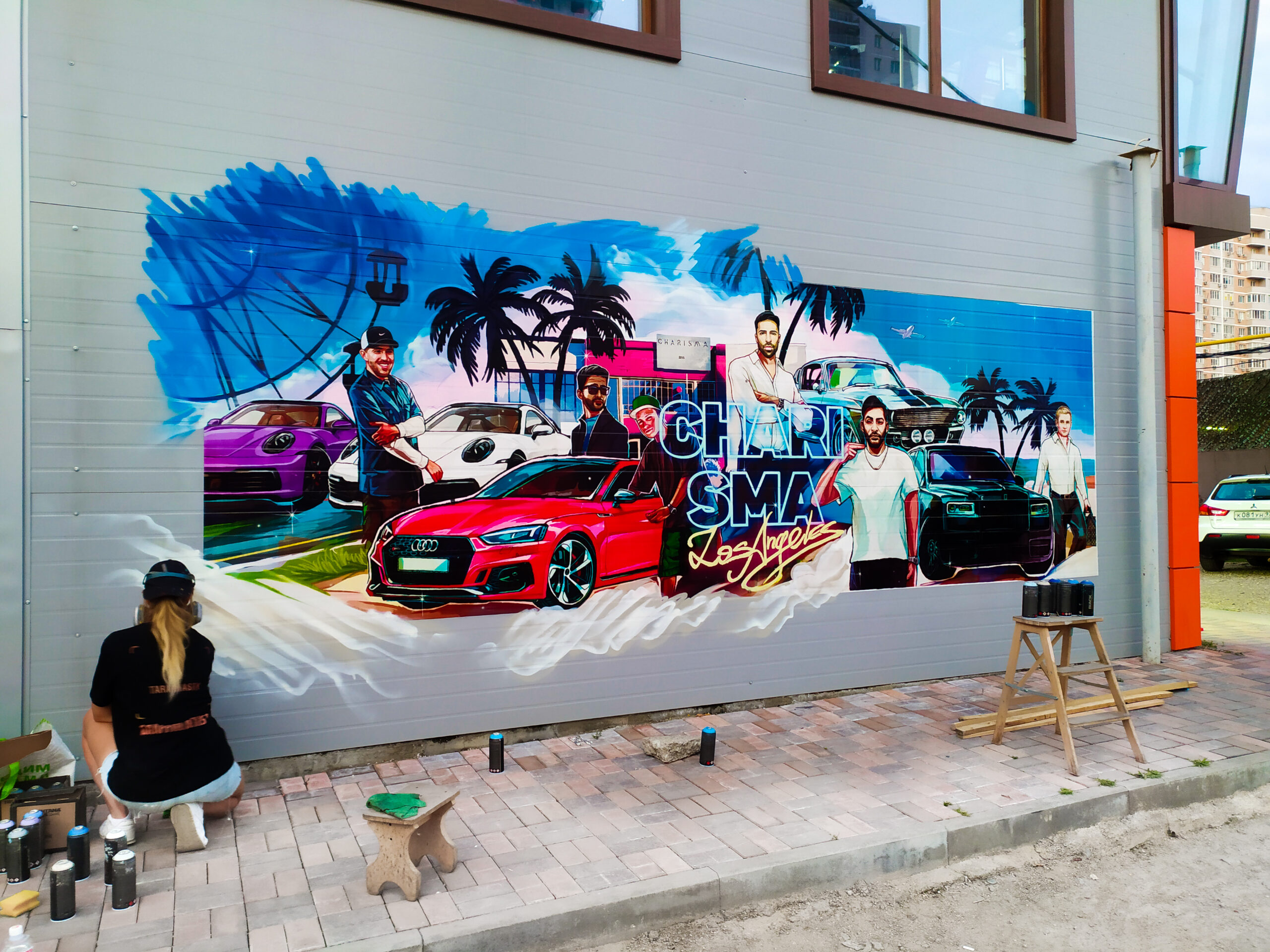
If you’ve ever had a graphic put on a wall, it was probably vinyl. Vinyl is a big printed sticker, and it’s been the go-to for a long time. So, it’s a fair question: why would you choose something different?
Here’s what I’d want to know if it were my wall.
Where vinyl does well. Vinyl can be trimmed right up to an edge. If you want an image that runs into a corner or meets the ceiling exactly, vinyl handles that easily.
Where vinyl struggles. It’s an adhesive, and adhesives age. Over time vinyl can bubble, peel, or crack, and when it comes off, it often takes paint or drywall paper with it. I’ve seen walls after vinyl removal and they look like they lost an argument.
Where UV printing does well. The ink goes directly onto the wall and cures on contact, so there’s nothing to bubble, peel, or lift. It looks intentional, like the wall was built that way, because in a sense it was.
Where UV printing has limits. My printer can’t reach all the way into a corner or tight against the ceiling. I’d rather tell you that now than surprise you on install day. When a design truly needs to go edge to edge, I print it on aluminum composite panels in my shop and install those on site. You get the clean edge without the sticker.
So which is right for you? It depends on the wall, the design, and how long you want it to last. If you’d like a straight answer for your space, I’m happy to come take a look. I’ll bring a tape measure, and I promise not to lecture you about adhesives. Much.